Thinking about buying near Lake Lanier in Cumming? The view, the water access, and the lifestyle can be hard to resist, but lake-area homes come with a different set of questions than a typical suburban purchase. If you want to make a smart move, it helps to understand pricing, shoreline rules, flood and septic issues, and how daily logistics may change once you live near the lake. Let’s dive in.
Lake Lanier living starts with your goals
Not every buyer wants the same version of lake living. You may picture walking from your backyard to the water, or you may simply want quick access to boating, marinas, and weekend recreation without taking on the cost and upkeep of a shoreline property.
That distinction matters in Cumming. Lake Sidney Lanier is a major recreational and water resource with 39,000 acres of water, more than 690 miles of shoreline, 10 marinas, and 76 boat ramps. Because the lake is so large and heavily used, the right home depends less on the word “lake” in a listing and more on how you actually plan to use it.
Cumming lake-area pricing can vary widely
One of the biggest mistakes buyers make is assuming all waterfront homes fall into one price band. In reality, Cumming’s waterfront inventory is limited and pricing can be uneven depending on water access, views, dock situation, updates, and overall property condition.
Forsyth County’s median sale price was $610,000 in March 2026, and Zillow’s average Cumming home value was $603,209 as of March 31, 2026. That gives you a useful baseline when comparing lake-adjacent homes to the broader local market.
At the same time, current waterfront pricing spans a wide range. Redfin showed 61 waterfront homes with a median listing price of $594,000, while current Zillow examples included listings around $700,000, $785,000, $1.199 million, $1.385 million, $1.59 million, and $2.95 million. In plain terms, homes with stronger views, better updates, or more favorable dock situations can sit well above a simple waterfront median.
What that means for your search
You should compare homes based on usable value, not just distance to the water. A house near the lake with easier access to GA 400, fewer maintenance concerns, and marina convenience may fit your budget and lifestyle better than a higher-priced shoreline property.
If your goal is direct water access from home, expect a narrower pool of options and more due diligence. If your goal is the lake lifestyle more broadly, an off-lake home can open up more choices and often reduce your upfront and ongoing costs.
Shoreline access is not the same as private ownership
This is one of the most important things to understand before you buy near Lake Lanier. A waterfront address does not automatically mean you own the shoreline in the way many buyers assume.
The U.S. Army Corps of Engineers states that Lake Lanier’s shoreline is open to public use. That means a property touching the lake does not automatically come with private, exclusive use of the shoreline just because it appears waterfront on a map or listing.
Ask the right questions before you commit
Before you move forward on a shoreline home, verify:
- Whether the property is adjacent to public land managed by the Corps
- Whether there is an existing dock or shoreline permit
- Whether any improvements were properly approved
- Whether the home offers the type of water access you actually want
- Whether your expectations match the legal and practical reality of the site
This step can protect you from paying a premium for something that does not function the way you expected.
Docks and shoreline changes need careful review
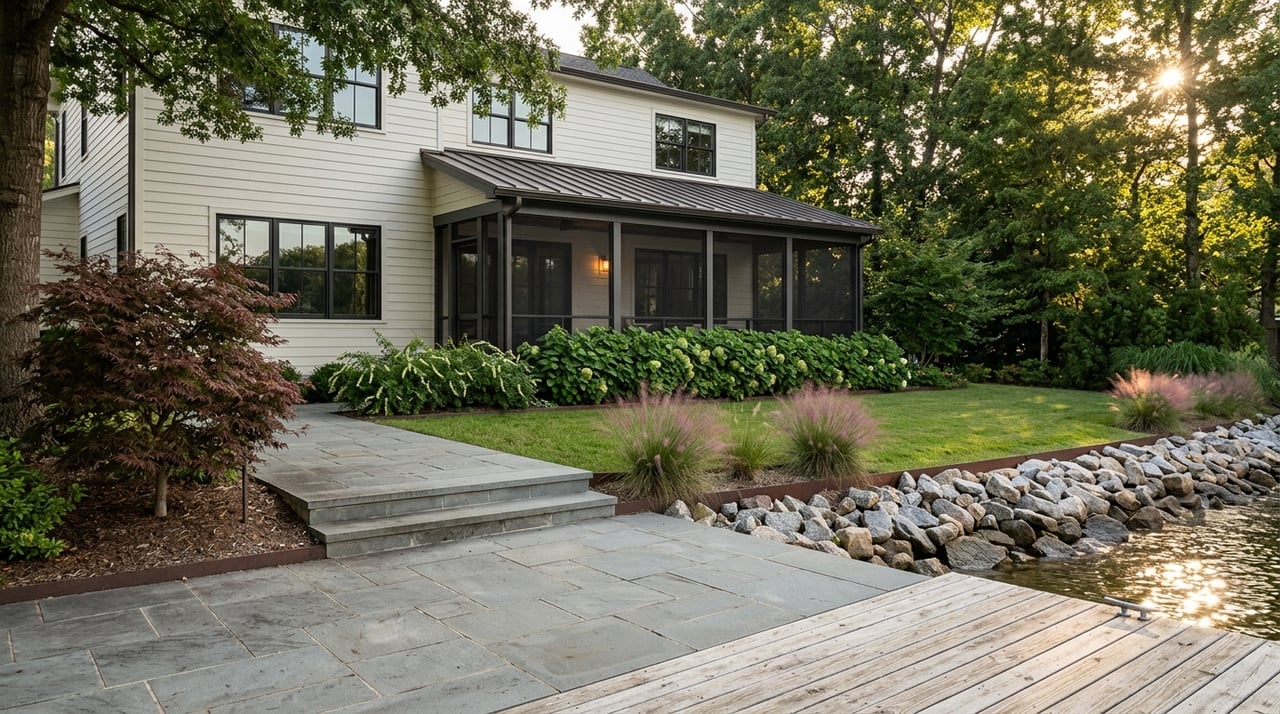
If a dock is part of your plan, do not assume you can simply add one after closing. Dock rights, permits, and future changes all need to be verified during due diligence.
The Corps’ Shoreline Use Permit program applies to owners adjacent to public lands zoned as limited development. First-time applicants for new facilities must meet on-site with a ranger, and new owners of existing facilities can apply for a permit through the operation office.
There is another key point many buyers miss. The Corps says there is a limit on how many permits can be issued at one time, and a wait-list may apply if no permits are available.
Important dock permit facts
Buyers should know that shoreline permits and licenses:
- Are issued for a maximum of five years
- Are nontransferable
- Do not grant real estate rights
- Do not create private exclusive use rights on government property
- Require prior approval for modifications
The Lake Lanier Project Management Office also handles permits for dock, riprap, and small silt-removal work. According to the Corps, any work on public property must be approved before it is done.
That means you should confirm not only what exists today, but also what you may or may not be allowed to change later. If your dream setup includes a modified dock, shoreline stabilization, or other work, that needs to be researched before you buy.
Off-lake homes can still deliver the lake lifestyle
For many buyers, an off-lake property is the sweet spot. You may spend less, avoid some shoreline complexity, and still enjoy boating and recreation through marinas and public ramps.
That option is especially practical on Lake Lanier because there are 10 marinas and 76 boat ramps. However, many launches charge user fees, and some ramps may close when water levels are low.
Convenience matters more than map distance
A home that looks close to the lake online may not feel simple on a busy Saturday. Weekend traffic, launch access, marina location, and seasonal ramp availability can all affect how easy your lake routine really is.
If you plan to boat often, think through your actual routine. Where will you launch, where will you store the boat, and how much driving are you willing to do each weekend? Those answers can help you decide whether shoreline living is worth the premium or whether off-lake convenience is the better fit.
Boat ownership adds another layer
If you plan to keep a boat, factor in the administrative side as well as the fun part. Georgia requires registration for all mechanically propelled vessels and sailboats over 12 feet used on state waters, and registrations renew every three years.
Georgia also requires boater education for operators born on or after January 1, 1998, who operate motorized vessels. If boating will be part of your lifestyle, it helps to account for registration, operator requirements, launch planning, and storage before you buy.
Flood risk should be part of your due diligence
Homes near water often need a closer look at flood exposure. Even if a property is attractive and well maintained, you still need to verify flood zone status and understand what that could mean for insurance, financing, and future improvements.
FEMA notes that standard homeowners insurance does not typically cover flood damage, and the FEMA Flood Map Service Center is the official source for flood hazard maps. FEMA also notes that lenders can require flood insurance for properties in a Special Flood Hazard Area when a federally backed loan is involved.
Forsyth County requirements matter too
Forsyth County’s flood ordinance adds another layer for properties in a Special Flood Hazard Area. The county says no development activity may occur on such a site until county requirements are met, and applications for those projects must include a floodplain management and flood-damage-prevention plan signed and stamped by a Georgia-licensed professional engineer.
The ordinance also treats missing elevation or compliance documentation as a presumed violation until the documents are provided. For buyers, that means flood due diligence is not just about insurance. It can also affect renovation plans, additions, and other future improvements.
Septic and sewer are worth checking early
Near-lake homes can also involve septic questions that buyers in more typical subdivision settings may not expect. Sewer availability is not universal, so it is important to confirm how the property is served and what that means for your plans.
Forsyth County’s permitting guidance notes that septic-system applications are handled separately by the Georgia Department of Health and Forsyth County Environmental Health. If a home uses septic, that can affect inspection planning, future upgrades, and transaction timing.
This is especially important if you are considering renovations, adding bedrooms, or buying an older home. A quick early check can save time and reduce surprises later in the process.
Commute and daily driving still matter
The lake lifestyle can be appealing, but daily logistics still shape how happy you will be in the home. If you commute to Alpharetta, North Fulton, or Atlanta, your route to GA 400 may matter just as much as your lake view.
GDOT’s state highway map shows GA 400 running through Forsyth County and south to Fulton County and I-85. In practical terms, homes with easier access to GA 400 are often the better fit for buyers who need regular commuter convenience, while deeper lake locations can add local drive time.
Think beyond the showing
A home can feel peaceful during a weekday tour and still create friction in your real life. It helps to think about school runs, office commutes, grocery trips, and weekend lake traffic before you decide that a tucked-away location is the right trade.
That balance is personal. Some buyers gladly accept extra drive time for direct water access, while others prefer easier daily convenience and use marinas or ramps for their lake time.
A smart lake-area purchase comes down to fit
Buying near Lake Lanier in Cumming is rarely just about finding the prettiest view. It is about matching the property to the way you want to live, then confirming the rules, costs, and limitations that come with that choice.
The best purchase for you may be a shoreline home with direct access and a well-documented permit situation. Or it may be an off-lake home that gives you strong value, easier upkeep, and reliable access to marinas and ramps.
When you know what questions to ask early, you can shop with more confidence and avoid expensive surprises. That kind of clarity matters even more in a market where pricing, access, and property conditions can vary so widely.
If you are weighing lakefront versus near-lake options in Cumming, Rhonda Shell Real Estate can help you evaluate the details that matter most and guide you toward a purchase that fits your goals.
FAQs
What should you verify before buying a waterfront home near Lake Lanier in Cumming?
- You should verify shoreline access, any existing dock or shoreline permits, whether past improvements were approved, flood zone status, septic or sewer service, and how the property fits your boating or commute needs.
Does a waterfront home on Lake Lanier include private shoreline rights?
- Not necessarily. The U.S. Army Corps of Engineers states that Lake Lanier’s shoreline is open to public use, so a waterfront address does not automatically provide private exclusive use of the shoreline.
Can you add or change a dock after buying a Lake Lanier home?
- You should not assume you can. The Corps requires approval for dock and certain shoreline-related work, permits are subject to rules and limits, and modifications require prior approval.
Is an off-lake home in Cumming a good option for Lake Lanier access?
- Yes, it can be. Off-lake homes may offer a lower price point and less maintenance while still providing access to Lake Lanier through marinas and public boat ramps.
Why does flood-zone research matter for homes near Lake Lanier?
- Flood-zone research matters because standard homeowners insurance does not typically cover flood damage, lenders may require flood insurance in certain areas, and Forsyth County has added rules for development in Special Flood Hazard Areas.
What should boat owners know before buying near Lake Lanier in Cumming?
- Boat owners should plan for Georgia vessel registration, possible boater education requirements, launch or marina access, storage, and the fact that some ramps may close when water levels are low.
How does commute planning affect a Lake Lanier home search in Cumming?
- Commute planning matters because homes deeper in lake areas may add drive time, while homes with easier access to GA 400 may work better for buyers commuting toward Alpharetta, North Fulton, or Atlanta.